
Back Pain & Musculoskeletal Physiotherapy
Sciatica: Why Does Back Pain Travel Down Your Leg?
By Adam Neou, Physiotherapist ·
Sciatica is a term commonly used to describe pain that travels from the lower back or buttock down the leg. It may extend into the thigh, calf or foot and can sometimes be accompanied by tingling, numbness or weakness.
However, not all pain travelling down the leg is caused by an irritated nerve.
Pain can travel into the leg because of sensitive muscles, joints or other structures in the lower back and pelvis. In other cases, a spinal nerve root may be irritated or compressed.
Understanding the difference can help explain your symptoms, guide treatment and determine whether further investigation is needed.
What is sciatica?
Sciatica is a commonly used term for radiating leg pain that is often associated with irritation of the sciatic nerve or its nerve roots.
The sciatic nerve is formed by nerves originating in the lower spine. It travels through the buttock and down the back of the leg, with branches supplying parts of the lower leg and foot.
Not all pain that follows this general pathway originates from the sciatic nerve. The term sciatica is often used broadly, so understanding the source of symptoms is important.
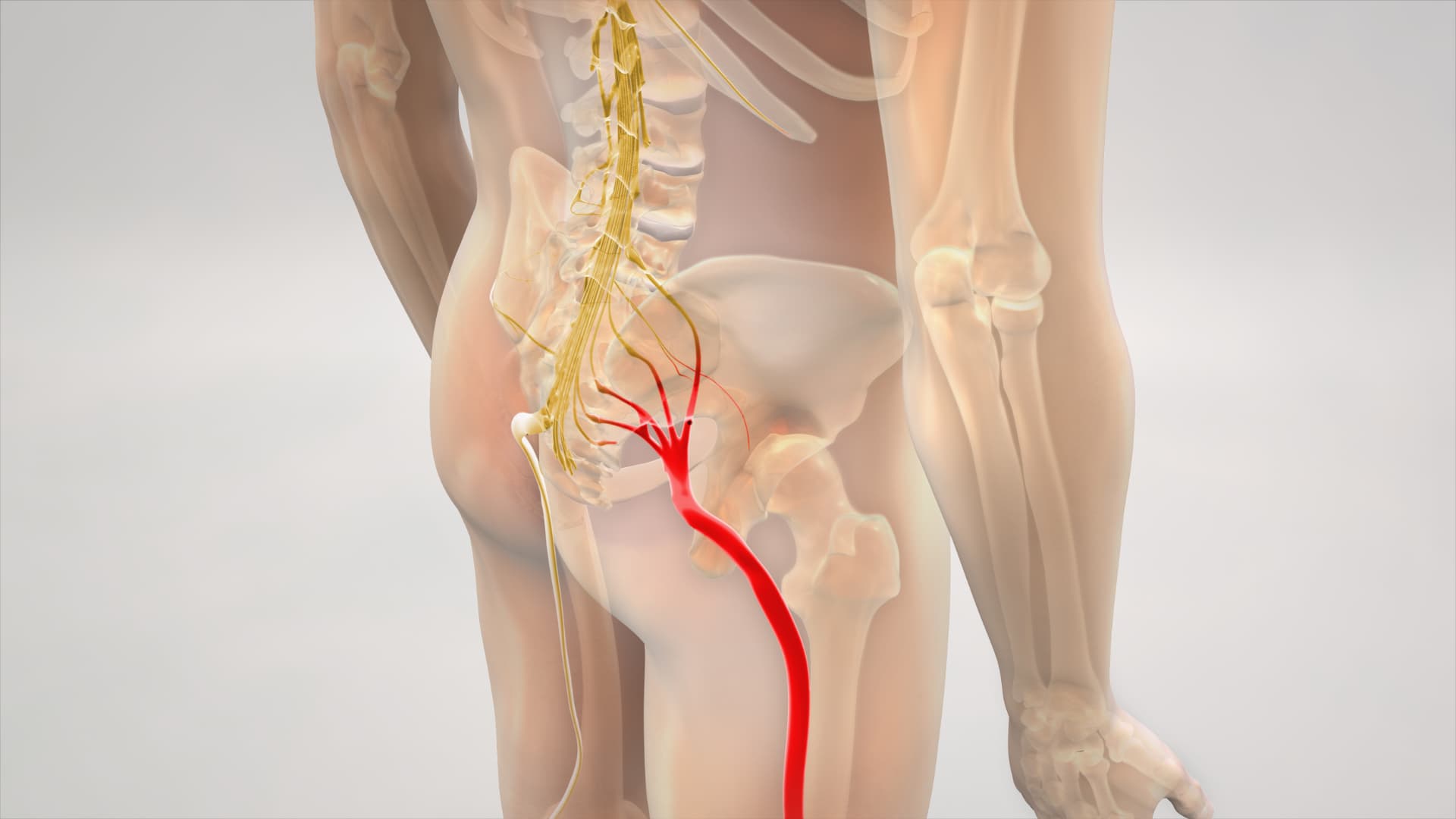
Understanding the three types of back-related leg pain
Leg pain associated with the lower back can be broadly understood in three ways: referred pain, radicular pain and radiculopathy.
Although these terms sound similar, they describe different problems.
1. Referred leg pain: Pain that travels from the back
Referred pain occurs when pain originating in one area is felt somewhere else.
For example, sensitive muscles, joints or other tissues in the lower back may cause pain that spreads into the buttock or leg. This type of pain does not originate from an irritated spinal nerve root.
You may notice:
- A dull ache, heaviness or spreading discomfort
- Pain in the buttock, thigh or even below the knee
- Symptoms that change with certain movements or positions
- No associated loss of nerve function, such as muscle weakness or altered reflexes, when the problem is isolated referred pain
An important point: Pain travelling below the knee does not automatically mean a nerve is involved. The location of pain alone cannot reliably distinguish referred pain from nerve-related pain.
2. Radicular pain: Pain arising from an irritated nerve root
Radicular pain occurs when a spinal nerve root becomes irritated or sensitive.
Nerve roots are the nerves that branch off the spinal cord as they leave the spine. They carry signals between the brain, spinal cord and the rest of the body. When a nerve root becomes irritated, it can produce pain that travels down the leg.
People often describe this pain as:
- Sharp, shooting or electric
- Burning or intense
- Travelling from the lower back or buttock into the leg, sometimes reaching the foot
- Occasionally accompanied by pins and needles or tingling
Radicular pain can occur when a disc bulge or herniation irritates a nearby nerve root. However, the relationship between a scan finding and your symptoms needs to be assessed carefully.
Radicular pain does not necessarily mean the nerve has lost function. A person can experience nerve-related pain while still having normal muscle strength, sensation and reflexes.
3. Radiculopathy: When a nerve loses some of its function
Radiculopathy describes a problem with the function of a spinal nerve root.
Unlike radicular pain, which refers to pain arising from an irritated nerve root, radiculopathy involves changes in how the nerve works.
Depending on the affected nerve, this may cause:
- Muscle weakness, such as difficulty lifting the foot or standing on your toes
- Reduced sensation or numbness in part of the leg or foot
- Changes in reflexes, which a clinician can assess during an examination
Radiculopathy can occur with pain, but it can also occur without significant pain.
For example, someone may have noticeable weakness in a particular muscle group without experiencing much back or leg pain.
New or worsening muscle weakness should be assessed promptly by a healthcare professional.
What is the difference between referred pain, radicular pain and radiculopathy?
| Type | What's happening? | Typical features |
|---|---|---|
| Referred leg pain | Pain originates from muscles, joints or other musculoskeletal structures. | Aching or spreading pain; does not require nerve involvement. |
| Radicular pain | An irritated or sensitive spinal nerve root produces pain. | Shooting, burning or electric pain; may occur without nerve weakness. |
| Radiculopathy | A spinal nerve root has impaired function. | Weakness, altered sensation or reduced reflexes, with or without pain. |
These problems can overlap. A person may have radicular pain and radiculopathy at the same time, for example.
A physiotherapy assessment can help determine which features are present and whether further medical investigation is required.
What causes sciatica and back-related leg pain?
Several conditions can contribute to pain travelling from the lower back into the leg.
Disc bulge or herniation
A disc herniation occurs when material from a spinal disc extends beyond its usual boundaries. In some cases, this can irritate or compress a nearby nerve root and contribute to radicular pain or radiculopathy.
However, disc bulges and herniations are also common in people who have no pain at all.
A scan finding does not automatically mean it is the cause of your symptoms.
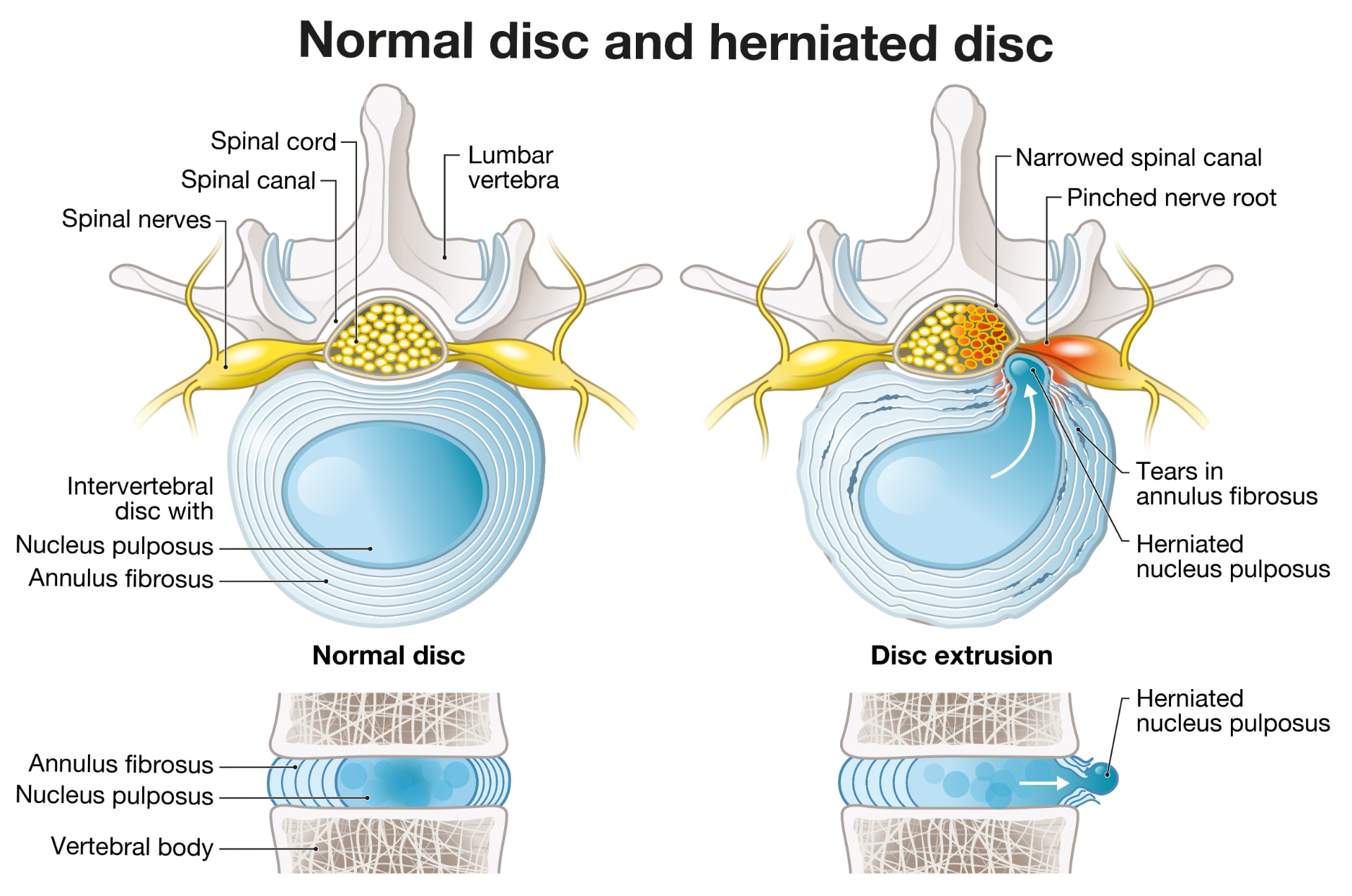
Age-related changes in the spine
As we age, the discs and joints of the spine naturally change.
In some people, these changes can narrow the spaces through which nerves travel. This is known as spinal stenosis.
When narrowing affects a nerve root, it may contribute to leg pain, numbness or weakness. Some people notice symptoms when standing or walking for prolonged periods, which may improve when sitting or bending forward.
These changes are common and need to be interpreted alongside your symptoms and examination findings.
Musculoskeletal sensitivity
The muscles, joints and other tissues around the lower back and pelvis can also become sensitive. This may cause referred pain into the buttock or leg without an irritated nerve root.
Pain can be influenced by physical activity, sustained positions, sleep, stress and other individual factors. These influences do not mean the pain is imaginary or that there is necessarily serious damage.
How is sciatica assessed?
A physiotherapist or doctor will ask about your symptoms, how they started and what makes them better or worse.
The assessment may include:
- Your pain distribution and whether you have tingling, numbness or weakness
- Movements and positions that reproduce or ease your symptoms
- Muscle strength, sensation and reflexes
- Tests that assess how sensitive the nerves are to movement
No single test can reliably identify every cause of leg pain. The findings need to be considered together.
The assessment also helps identify signs that may require further medical investigation.
Do you need an MRI for sciatica?
Not everyone with sciatica or back-related leg pain needs an MRI.
Scans can show disc changes, narrowing and other structural findings, but these can also be present in people without symptoms.
An MRI may be considered when there is concern about serious underlying pathology, significant or progressive neurological changes, or persistent symptoms where the result would influence treatment or surgical planning.
Your healthcare professional can help determine whether imaging is appropriate based on your symptoms and examination.
How can physiotherapy help?
Many episodes of back-related leg pain improve over time, although recovery varies depending on the cause and severity of symptoms.
Physiotherapy can help you understand your symptoms, remain active safely and gradually return to your usual activities.
Education and reassurance
Understanding what may be contributing to your pain can help reduce uncertainty.
Pain does not always indicate ongoing tissue damage. Equally, new neurological symptoms need to be taken seriously and assessed appropriately.
Staying active
Prolonged bed rest is generally not recommended for uncomplicated back pain or sciatica.
Where possible, continue with comfortable daily activities and gradually build up your movement as symptoms allow. You may need to temporarily adjust activities that significantly aggravate your symptoms.
Individualised exercise
Exercise can help improve strength, movement tolerance and confidence.
Your program may include exercises for the lower back, hips and legs, with the intensity and type of exercise adjusted to your symptoms and goals. There is no single exercise that is appropriate for everyone with sciatica.
Monitoring nerve symptoms
If you have numbness, weakness or other neurological symptoms, these need to be monitored.
Your physiotherapist can assess changes in strength, sensation and function and refer you for further medical review if required.
When should you seek urgent medical attention?
New or progressive leg weakness also warrants prompt medical assessment, even if you do not have the symptoms listed above.
How NeoPhysio can help
At NeoPhysio, Adam Neou provides individualised musculoskeletal physiotherapy to help you understand your symptoms, manage pain and work towards recovery.
Assessment focuses on identifying the likely contributors to your back and leg pain, checking for relevant nerve-related changes and developing a treatment plan suited to your needs.
Experiencing sciatica or back-related leg pain?
Back and leg pain can have a number of contributing factors. Getting the right assessment is an important first step.
NeoPhysio provides physiotherapy for sciatica and back-related leg pain in Canberra, with appointments at Florey Medical Centre, 19 Kesteven Street, Florey ACT 2615.
Book an appointment with Adam at NeoPhysio to discuss your symptoms and find out whether physiotherapy may be appropriate for you.
Articles
Explore more helpful articles from NeoPhysio.
Back Pain & Musculoskeletal Physiotherapy
Acute Low Back Pain: Causes, Recovery and When You Need a Scan
Learn why sudden low back pain can be severe, when imaging may be needed and how physiotherapy can support recovery.
Dizziness & Vestibular Physiotherapy
BPPV: What It Is, Risk Factors and How Physiotherapy Can Help
Learn what BPPV is, common risk factors, how it is diagnosed and treated, and how physiotherapy can help with positional dizziness.